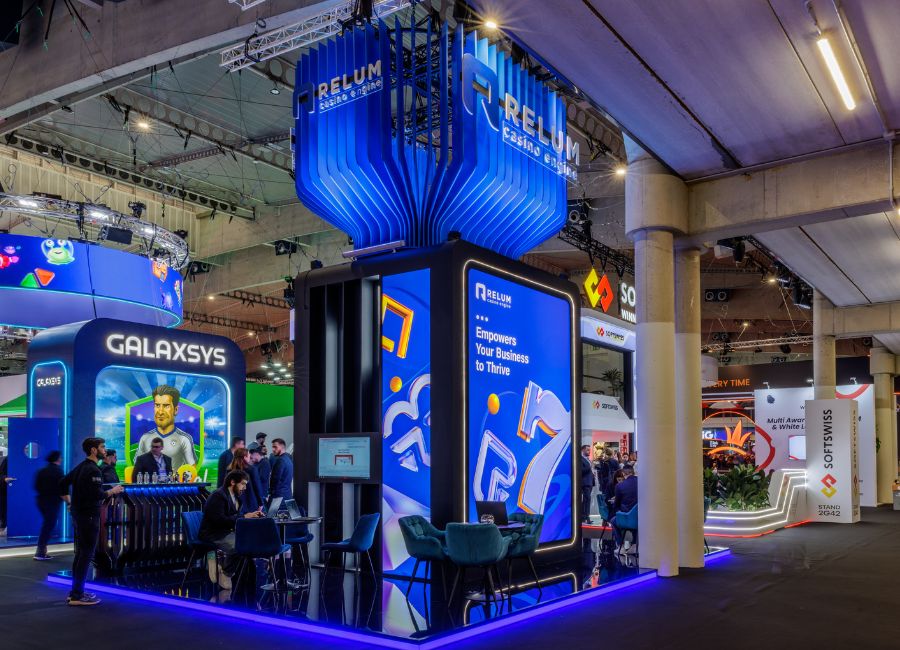


Creating a stand that works across different trade shows has become a primary goal for many brands. Investments in design and production are increasingly strategic, which is why it is highly valued that a space can adapt to different venues.
In this, artificial intelligence plays a key role, as it helps make faster decisions and propose solutions that, a few years ago, would have required weeks of work.
AI proves particularly useful in the initial phase of shaping the project. It allows anticipating issues that were previously left unresolved: how visitors will move within the space, which areas could become congested, how heights fit, or which materials will work best if the stand will travel extensively. This ability to foresee scenarios makes the creative phase more agile, as problems are detected before anything is built.
When the brief is shared with AI from the beginning, specifying the type of event, expectations for the space, and areas to highlight, it starts suggesting reasonable ideas and adjustments. It doesn’t replace the team’s judgment but helps make certain decisions faster. Based on a base design, AI can propose variations for graphic modules, demo zones, meeting areas, or even solutions to optimize square footage without losing impact.
AI also makes it easier to find references. If asked to review recent stand design trends, it returns proposals that help visualize how the project could evolve. For example, it is helpful when tasked with identifying approaches aligned with trends in stand design, ensuring the project doesn’t get stuck in a single style or rigid ideas.
Of course, all of this only makes sense if a team is capable of turning those recommendations into a viable design. Often, reviewing the requirements for choosing a suitable stand design and production agency is crucial, since reuse leaves no room for errors: the stand must withstand multiple setups without losing form or impact.
Useful Information for AI in Designing a Reusable Stand
- Document past setups and versions: The more information AI has about how the stand was built at previous events, the better it can help optimize future configurations. Real photos, final plans, and adjustments made on-site help identify what works and what should be reconsidered.
- Share the full brief from the start: Including details such as event type, available space, objectives, budget, and technical needs ensures proposals are aligned from the outset and avoids unnecessary adjustments later.
- Use AI to compare options: AI excels when used to present different alternatives, such as layout changes, height adjustments, or module reorganization. It helps weigh pros and cons before making a final decision.
- Plan for post-event use from the start: Informing AI how the stand will be reused after the event maximizes design potential. It helps identify which elements can be kept, which should be adapted, and how to prepare the space for future setups, avoiding solutions that only work for a single event.
Conclusion
AI is a tool that, when used effectively, simplifies stand design and facilitates adaptation for different events. It doesn’t replace experience or creativity but allows for anticipation, better decision-making, and maximizing the potential of a single space over time.