


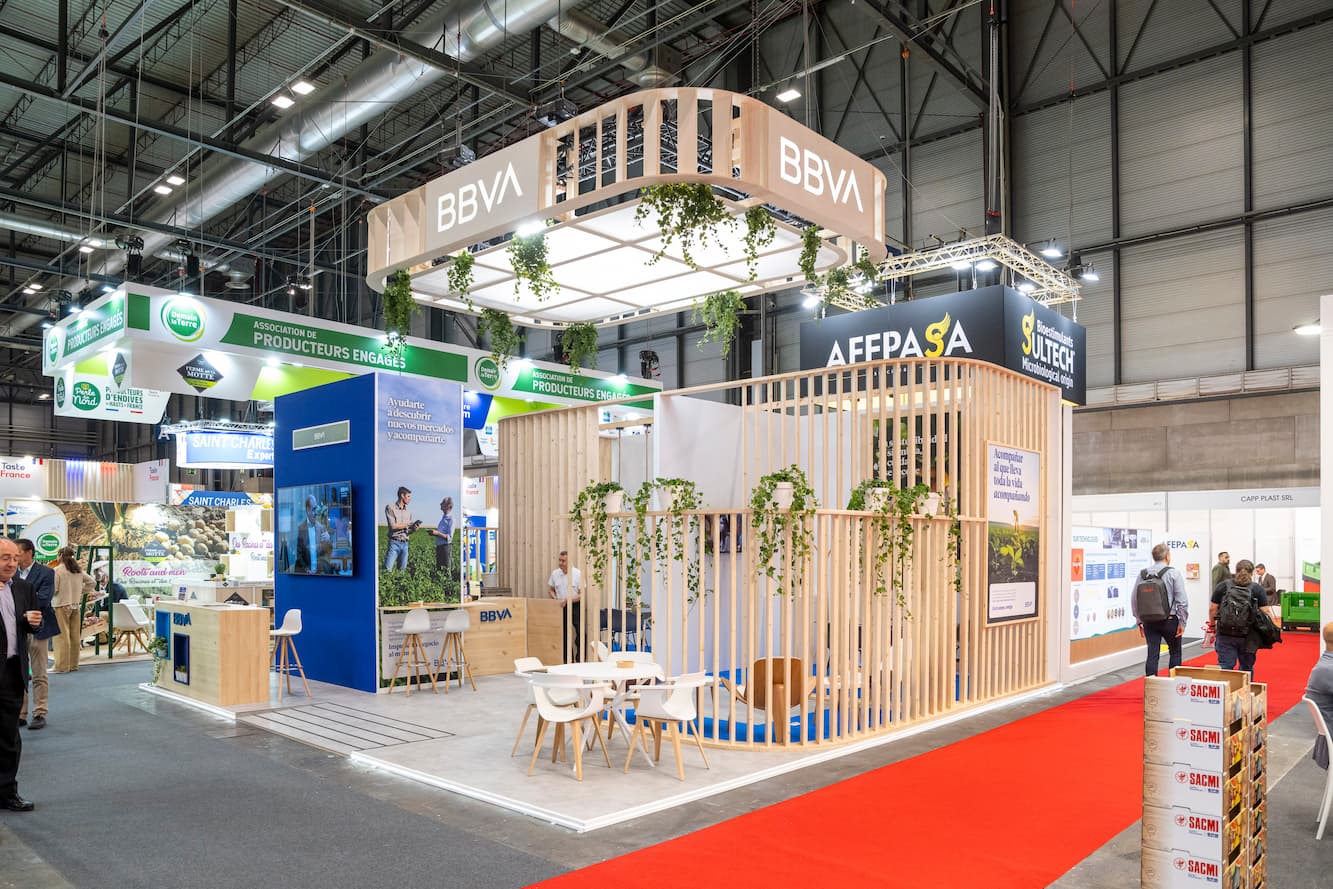
At trade shows and conferences, the stand is one of the main points of contact between brands and their customers. It is the place where conversations happen, solutions are presented, and experiences are created that help reinforce a company’s positioning within the event.
For this reason, choosing the type of stand should not be based solely on aesthetics, but also on practical criteria such as the type of event, how often the company participates, and the available budget. There are different types of stands, each with its own characteristics that suit different needs.
Types of Stands at Events and Trade Shows
Before looking at each type, it is useful to have a general overview. In the event environment, stands mainly differ in three aspects: level of customization, ease of assembly and transport, and the ability to adapt to different trade show or conference formats.
These factors directly influence the experience created within the space and how the event is perceived from the customer’s point of view. Based on this, the most common types are modular stands, custom design stands, and portable stands.
Modular Stands
Flexible and adaptable
Modular stands are based on prefabricated systems that allow for different configurations. Their main advantage is flexibility. The same stand can be adapted to different space sizes or event types without needing to be redesigned from scratch.
Although they start from a standard structure, modular stands allow customization through graphics, lighting, and audiovisual elements.
Custom Design Stands
Aesthetic and tailor made
Custom design stands are fully personalized projects. They do not rely on standard structures but are designed from scratch to meet specific objectives and suit a particular event.
This type of stand is common at product launches, for example, where the brand aims to stand out and offer a distinctive experience. The spatial design, internal flow, lighting, and materials are all carefully planned to convey a clear message.
In these projects, considering trends in stand design is important, as they help create contemporary spaces aligned with the event industry and the expectations of professional attendees.
Portable Stands
Practical and lightweight
Portable stands are designed with a clear goal in mind: easy mobility between events. They are usually made of lightweight structures that allow for simple transport and quick assembly, without complex technical requirements.
They are commonly used at smaller corporate events where agility is essential. Although their design is usually simpler, they can still deliver a professional result if the graphic elements are well executed.
The main advantage of portable stands is efficiency, as they reduce both costs and setup time, making them a highly functional option in certain contexts.
At this point, the choice of finishes and the types of materials used for stands becomes important, as they affect both durability and how the space is perceived by visitors.
What to Consider When Choosing a Type of Stand
Selecting the most suitable type of stand depends on several factors that should be reviewed before starting any project:
- Event objectives and the type of presence desired
- Frequency of participation in trade shows and conferences
- Transport, assembly, and storage needs
- The experience you want to offer visitors within the space
- Budget
Conclusion
Not all stands work equally well at every event. Modular stands offer flexibility for brands that participate regularly in trade shows and want a more cost-effective solution. Custom design stands allow for more personalized spaces and creative use of materials. Portable stands make mobility easier in more agile event formats.
Choosing one type or another depends on the event, participation frequency, and how the space will be used during the trade show or conference. Defining this clearly from the start helps create stands that are more coherent, practical, and aligned with the objectives of each event.